


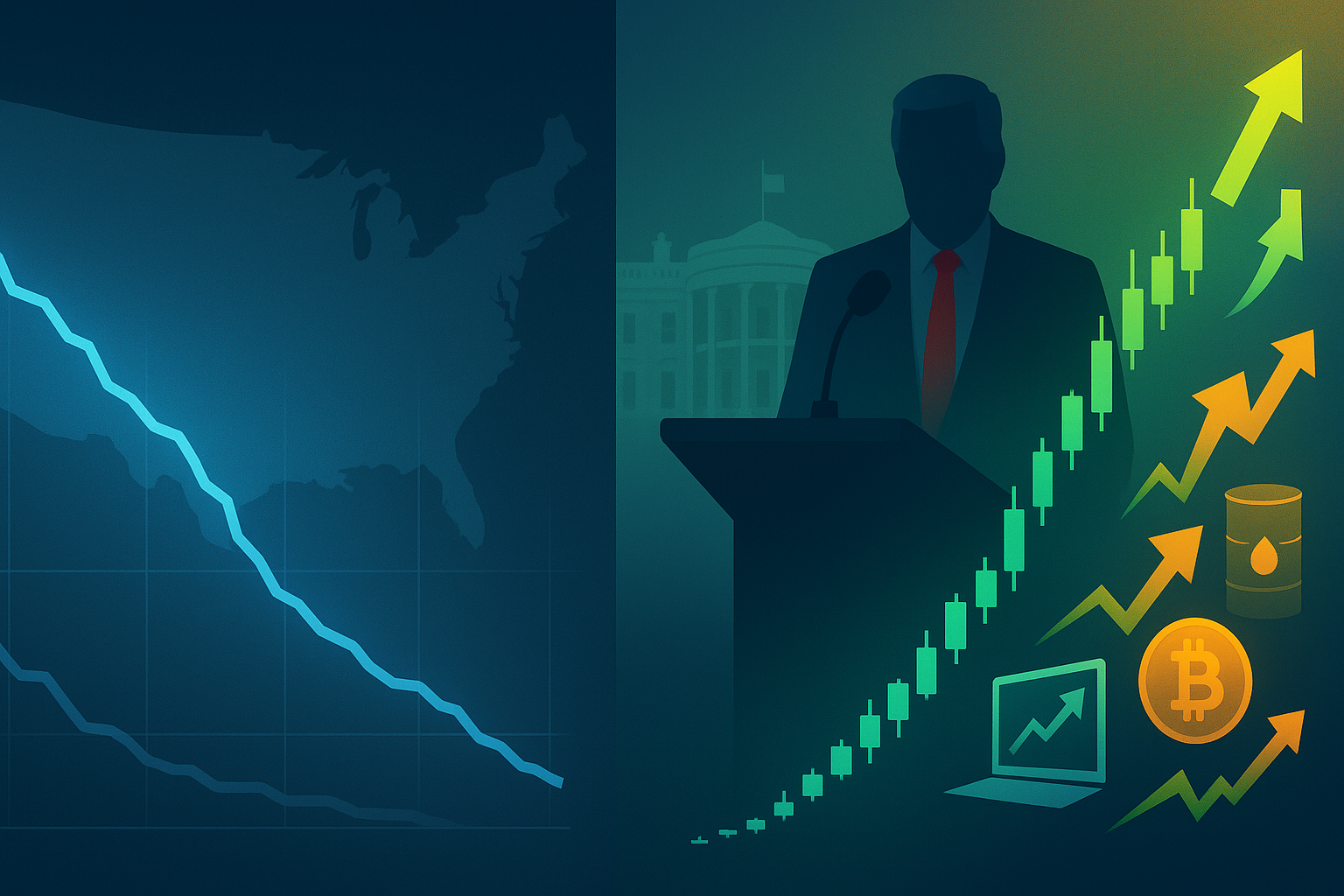
Cooler US Inflation Jolts Risk Assets as Traders Scan Trump Tariff Talk
Markets woke up edgy on February 13 as a fresh batch of US inflation data hit the tape and traders weighed what it might mean for interest rates, equities, and crypto. While consumer prices continued to drift lower on paper, the reaction across risk assets was anything but calm.
Inflation Eases, But Not Enough for Jittery Markets
The latest US consumer inflation figures for January showed price pressures continuing to cool from last year’s highs. On the surface, that’s exactly what both Wall Street and crypto traders have been hoping to see: a gradual return toward the Federal Reserve’s 2% target.
However, markets rarely trade on headlines alone. Investors focused on the nuances beneath the top-line numbers: which categories are still running hot, how persistent services inflation looks, and whether the overall trend gives the Fed confidence to pivot away from restrictive policy anytime soon.
Instead of celebrating, equity traders took profits. Major US stock indices slipped, and futures tied to blue-chip benchmarks such as the Dow Jones Industrial Average and tech-heavy indices like the Nasdaq tilted lower, signaling caution rather than euphoria.
Why a Cooling CPI Isn’t Automatically Bullish
On paper, softer inflation should mean a friendlier backdrop for risk assets. Lower inflation can translate into:
- Less pressure on the Federal Reserve to keep raising interest rates
- Cheaper borrowing costs over time for companies and consumers
- Higher valuations for growth stocks and long-duration assets like Bitcoin
But traders are watching for more than just direction; they care about speed and credibility. If inflation drifts lower at a snail’s pace, the Fed may feel forced to keep rates elevated for longer, which weighs on richly valued assets. If it falls too quickly, markets might worry about growth stalling out instead.
Right now, the data suggests a slow grind down in inflation rather than a rapid collapse. That leaves investors in a tricky middle zone—optimistic enough to stay in the game, but nervous enough to trim exposure when uncertainty spikes.
Crypto Mirrors Macro Anxiety
The crypto market, which has increasingly behaved like a high-octane extension of the tech sector, took its cues from the macro backdrop. Digital assets have become highly sensitive to expectations around interest rates and dollar liquidity. When bond yields tick higher on the idea that rates might stay restrictive, speculative assets—from AI stocks to altcoins—can feel the pinch.
Bitcoin and major altcoins saw choppy action as the inflation print crossed the wires. Rather than a clear breakout, price action resembled a tug-of-war between:
- Macro bears worried about “higher for longer” interest rates
- Long-term bulls who see every dip as an accumulation opportunity ahead of the next crypto cycle
For Bananas About Crypto readers, this environment is a reminder that macro still matters. Even in a world of blockchains, smart contracts, and decentralized finance, the old-school forces of inflation, rates, and growth expectations remain powerful drivers of price.
Trump’s Talk on Steel Tariffs Adds a Political Plot Twist
Adding another layer to the day’s volatility, traders also kept an eye on signals from Donald Trump regarding US steel tariffs. Any hint of relaxing trade barriers can ripple across multiple asset classes:
- Industrial stocks respond to changes in input costs and competitiveness
- Commodities like steel and iron ore react to perceived shifts in demand
- The US dollar can move as trade expectations shift
Although the details remain fluid, even the possibility of tariff changes can shift how investors price future growth and corporate earnings. For crypto, the link is indirect but real. Trade policy can affect risk sentiment, capital flows, and ultimately how much liquidity finds its way into speculative corners of the market.
What This All Means for Crypto Investors
When inflation is cooling but not convincingly under control, and political headlines are swirling, crypto markets tend to behave like a barometer of risk appetite. That can mean:
- Higher short-term volatility around key economic releases
- Fake-out rallies and sharp pullbacks as narratives shift
- Greater importance of macro literacy for anyone trading beyond a simple HODL approach
Instead of treating inflation data or tariff chatter as single, make-or-break events, crypto participants may be better served by zooming out. The bigger questions are:
- Is inflation trending down consistently over several months?
- Is the Fed inching toward an eventual rate cut cycle?
- Is political noise translating into real changes to growth or trade?
These broader arcs matter more for long-term positioning than any one data release.
Strategies for Navigating This Kind of Market
For traders and long-term believers in digital assets, a few principles can help during macro-heavy weeks:
- Expect data-day whiplash. Big prints like CPI, jobs numbers, and Fed meetings routinely spark rapid liquidations and short squeezes across crypto. Position sizing and leverage discipline matter.
- Separate noise from trend. One slightly hotter or cooler inflation reading doesn’t define the cycle. Watch multi-month patterns rather than overreacting to every candle.
- Diversify your thesis. Don’t rely solely on the “rates down, number go up” narrative. Adoption, regulation, and on-chain activity can also drive value.
- Use volatility to your advantage. For some, that means dollar-cost averaging; for active traders, it might mean defined levels for entries and exits rather than emotional decisions.
The Bottom Line
The latest US inflation report confirmed that price pressures are easing, but not fast enough to put markets at ease. Stocks pulled back, futures wobbled, and crypto followed the broader risk-off tone. At the same time, potential shifts in US steel tariffs under a Trump policy lens added another macro curveball for traders to digest.
In this kind of environment, crypto doesn’t trade in a vacuum. It dances to the rhythm of global liquidity, central bank expectations, and political headlines. For investors bananas about crypto, staying informed on macro isn’t optional anymore—it’s part of the edge.
