


Introduction
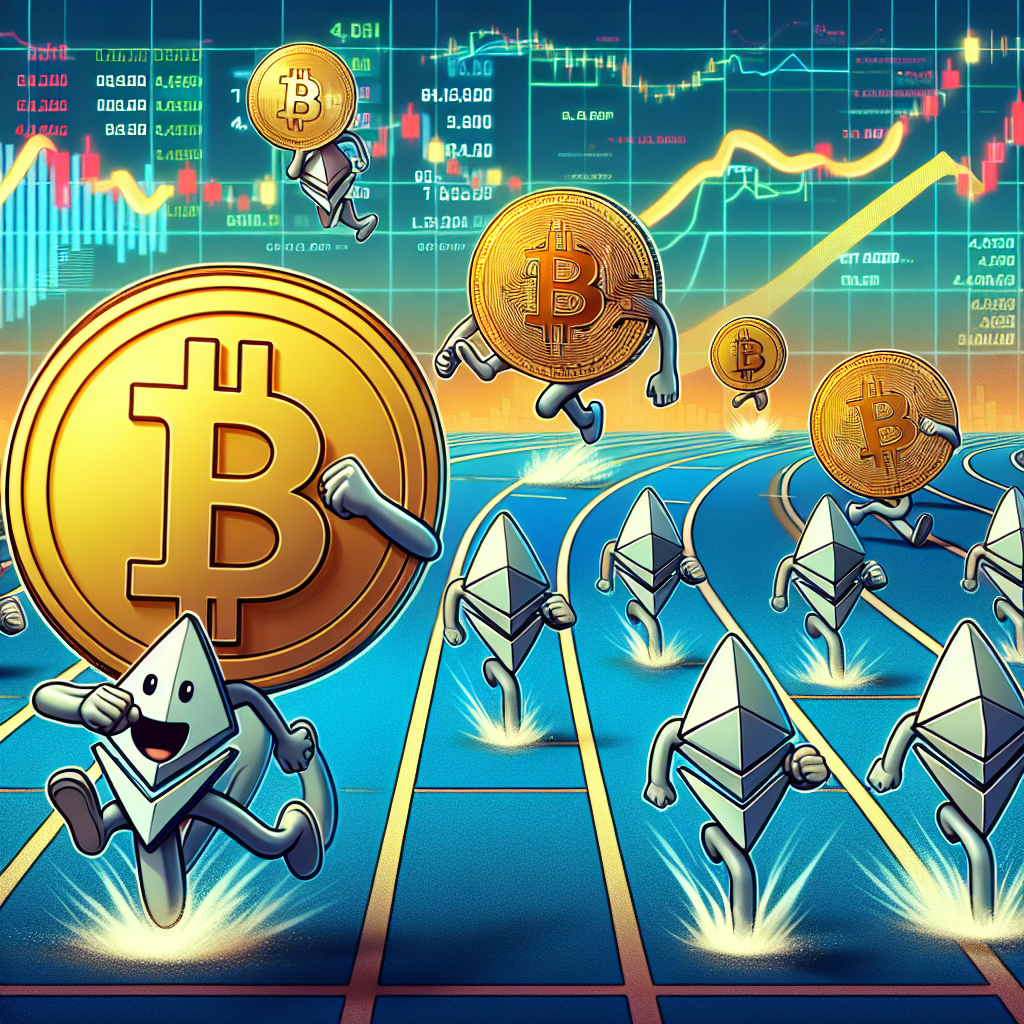
In the ever-evolving world of cryptocurrency, recent trends indicate that Bitcoin and Ether are making notable gains, while many altcoins are lagging behind in a low-volatility trading environment. This phenomenon has significant implications for investors and traders alike, suggesting differing levels of sentiment and market confidence among various digital assets. Understanding this dynamic is crucial for those looking to navigate the complexities of today’s crypto landscape.
Main Points
Key Point 1: Bitcoin and Ether’s Recent Performance
Both Bitcoin and Ether demonstrated resilience, with Bitcoin trading around $67,000 and Ether hovering near $1,970. Their slight increase of approximately 0.9% overnight highlights their robust market presence. Notably, Bitcoin’s recent fluctuation near the $66,000 threshold indicates its strong support levels, even as it faces challenges breaking the $70,000 psychological barrier. Ethereum, backed by solid fundamentals, struggles near the $2,000 mark, which remains a significant target for many traders.
Key Point 2: Weakness in the Altcoin Markets
In stark contrast to the gains of Bitcoin and Ether, the broader altcoin market is witnessing considerable weakness. A staggering 97 of the top 100 altcoins, excluding stablecoins, recorded losses, emphasizing a general lack of investor confidence. Liquidation events totaling $218 million further expose the fragility of sentiment within this sector. The current low-liquidity trading conditions for altcoins may hint at a challenging environment for these assets, suggesting that traders could be exercising caution amid potential pitfalls.
Key Point 3: Volatility Levels and Market Sentiment
Market volatility has significantly diminished since the sharp sell-off on February 5, leading to a tentative atmosphere where investors are left wondering if the current calm is merely a precursor to another downward shift. Effective risk management strategies are paramount as some traders align their positions with evolving market dynamics, revealing an inclination towards stabilization over aggression. Indicators such as increasing open interest at $15.38 billion and positive funding rates suggest that while caution prevails, some retail investors may be finding an opportunity to re-enter the market.
Key Point 4: Derivatives Market and Future Outlook
The derivatives market continues to reflect a complex picture of investor sentiment. Variations in the Bitcoin options market indicate an equilibrium between call and put volumes, suggesting mixed sentiment among traders. This equilibrium, along with an uptick in volatility skews, hints that participants are hesitant yet protective, opting for positions that could safeguard their investments amidst uncertainty. Moving forward, observing these dynamics can provide valuable insights into potential shifts in market trends.
Additional Insights
To achieve better outcomes in this dynamic market, traders should consider diversifying their portfolios beyond Bitcoin and Ether. Exploring stablecoins or upcoming projects with solid fundamentals might mitigate risks associated with the current altcoin slump. Furthermore, stay informed on macroeconomic factors influencing crypto prices, including regulatory developments and institutional adoption, to make well-rounded investment decisions.
Want to Know More
If you’d like to delve deeper into the world of cryptocurrency, check out our articles on Ledn Fires Up Wall Street With Bitcoin-Backed Bond Play and Digital Euro Countdown: ECB Plots 2027 Pilot With New Payment Partners.
Conclusion
In summary, as Bitcoin and Ether rise, the altcoin market struggles in a climate of low volatility. This trend epitomizes the existing dichotomy in the cryptocurrency market, where established tokens demonstrate strength while many alternatives falter. Investors would do well to monitor these developments closely, positioning themselves strategically in a shifting landscape.
