


Watch this article as a video
Listen to this article
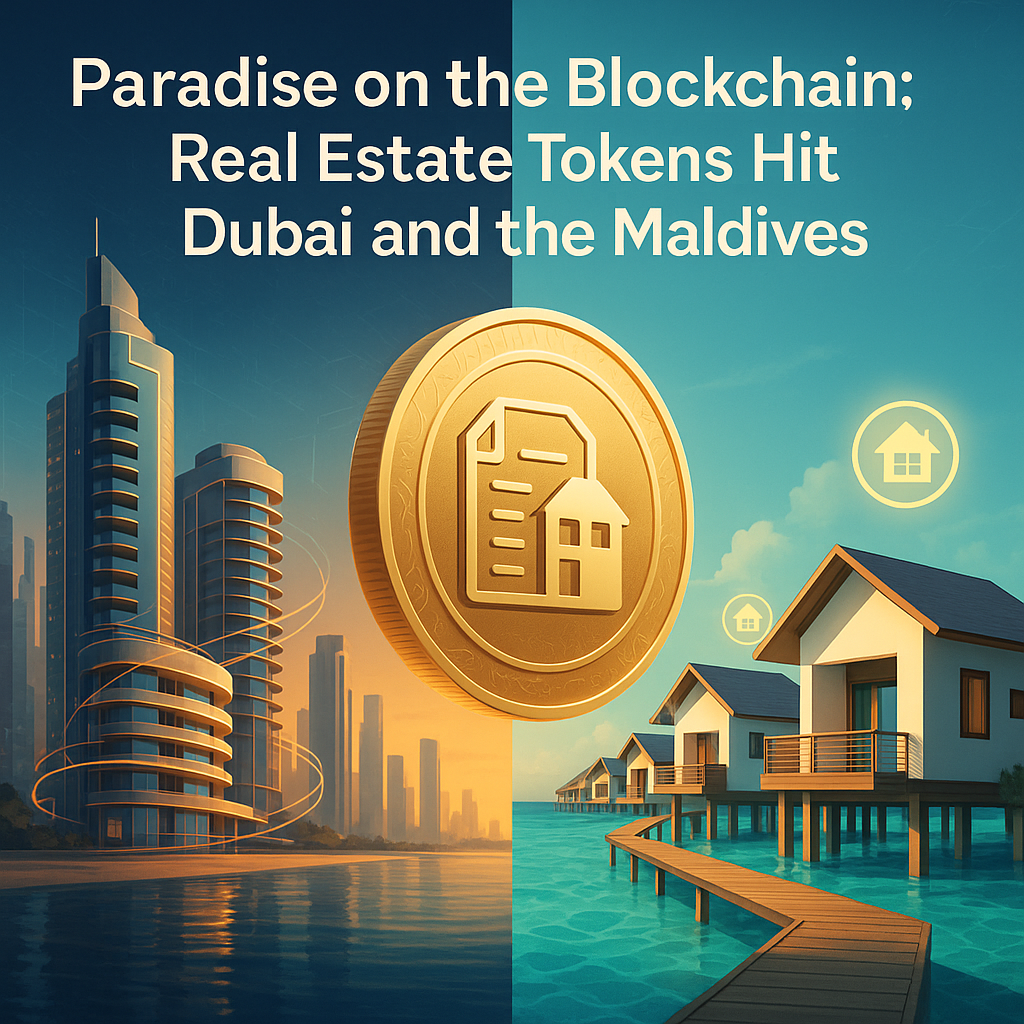
Paradise on the Blockchain: Real Estate Tokens Hit Dubai and the Maldives
The marriage of beachfront luxury and blockchain is no longer a crypto fever dream. This week, two high-profile real estate moves signaled that tokenized property is stepping out of the whitepaper phase and into the real world: a Maldives resort project linked to the Trump brand and new tokenization details from Dubai’s Land Department.
From Beachfront Suites to Blockchain Slices
Imagine swapping a traditional timeshare contract for a digital token that lives on a blockchain. Instead of signing a stack of paper and waiting weeks for approvals, you buy a fraction of a property like you would grab a token on an exchange.
That’s the direction the Maldives hotel project is aiming for. The development, associated with the Trump name, is exploring how to carve a luxury resort into blockchain-based tokens, potentially allowing global investors to own small pieces of a tropical asset that would normally be out of reach.
In a tokenized model, ownership stakes can be split into thousands or even millions of units. Each token could represent a tiny fraction of the resort’s value, opening the door to lower minimum investments and more fluid trading. Think of it as turning a massive beachfront hotel into a stack of on-chain “property shares.”
Dubai Doubles Down on Tokenized Property
While the Maldives is experimenting at the project level, Dubai is playing the long game at the city level. The Dubai Land Department has rolled out more information on how it plans to integrate tokenization into the local real estate ecosystem, signaling that blockchain-based ownership may soon be part of the official property playbook.
Instead of treating tokenized real estate as a fringe experiment, Dubai is looking at how these tokens can plug directly into its regulatory and property registration systems. That’s a big deal. It’s one thing for a startup to mint property tokens; it’s another when the land authority starts sketching out how this becomes part of mainstream infrastructure.
This approach hints at a future where buying a fraction of a Dubai apartment could be as simple as purchasing a token that’s recognized by both the blockchain and the city’s property registry.
Why Tokenized Real Estate Has Crypto Degens Raising an Eyebrow
For the Bananas About Crypto crowd, tokenized real estate is a fascinating mashup of the physical and digital worlds. Instead of pure speculation on memecoins, you get something backed by real bricks, mortar, and beachfront sand.
Some of the key attractions include:
- Lower entry barriers: Traditionally, buying into a luxury hotel or prime city property requires deep pockets. Tokens let smaller investors grab a slice without wiring six or seven figures.
- Liquidity potential: Real estate is famously illiquid. Tokenization aims to change that by making ownership units tradable on secondary markets, turning what used to be a locked-up asset into something you can move in and out of more easily.
- Global reach: A crypto wallet and internet connection might be all you need to gain exposure to properties in places like Dubai or the Maldives, without ever boarding a plane.
Of course, this isn’t a magic portal to instant yield. Underneath the digital wrapping, you’re still dealing with local regulations, property management, and real-world economic risks.
The Fine Print: Hype vs. Reality
It’s tempting to imagine that tokenization alone will fix everything broken about real estate, but that’s wishful thinking. There are some solid benefits, but also a chunky list of caveats:
- Regulatory complexity: Each jurisdiction has its own property laws and securities rules. What counts as a compliant token in one region might trigger regulatory alarm bells in another.
- Ownership enforcement: The blockchain can show who holds a token, but local courts and land registries still decide who legally owns the underlying property. That’s why Dubai’s direct involvement is so important—it tightens the bridge between on-chain records and off-chain authority.
- Operational risk: Even the most elegant token cannot fix poor property management, low occupancy rates, or misaligned incentives between developers and token holders.
In other words, tokenization is a powerful wrapper, not a magic wand. It can streamline access and trading, but the underlying asset and legal structure still matter just as much as ever.
Why Dubai and the Maldives Matter as Testbeds
Dubai has been racing to position itself as a global crypto and Web3 hub, and real estate is one of its most prized economic engines. Folding tokenization into that mix is a logical next step. If Dubai succeeds in creating a credible, regulated framework for tokenized property, it could set a template other cities try to copy.
The Maldives, with its resort-driven economy, offers a very different but equally interesting sandbox. Tokenized stakes in hospitality projects could give global investors a way to tap into tourism-heavy cash flows without directly running a hotel or resort. For a country built on island destinations, this kind of model could eventually transform how capital flows into new developments.
The Bigger Picture: Real-World Assets Go On-Chain
These moves by Dubai and the Maldives sit inside a broader trend: real-world assets migrating onto blockchains. We’ve already seen experiments with tokenized treasuries, private credit, and even art. Property is one of the largest asset classes on the planet, so even a small shift toward tokenization could move serious numbers.
For crypto natives, tokenized real estate offers a bridge between on-chain yield hunting and traditional investments. For institutions, it’s a way to test blockchain rails without abandoning familiar asset types. And for regulators, it’s both an opportunity and a stress test for how modern financial infrastructure should evolve.
What to Watch Next
The headline this week is simple: a Maldives resort tied to the Trump brand and the Dubai Land Department are both taking concrete steps toward tokenized property. But the real story will unfold over the next few years.
Key questions to keep an eye on include:
- Will secondary markets for these tokens develop enough liquidity to matter?
- How tightly will on-chain tokens be bound to official land registries and courts?
- Can these early projects prove that tokenization isn’t just a marketing buzzword, but a durable new ownership model?
For now, one thing is clear: blockchain isn’t just for trading pixelated animals anymore. From Dubai’s skyline to Maldivian beaches, real estate is stepping into the token era—and the market is watching to see whether this is a fad, or the new foundation of property investing.
