


Watch this article as a video
Listen to this article
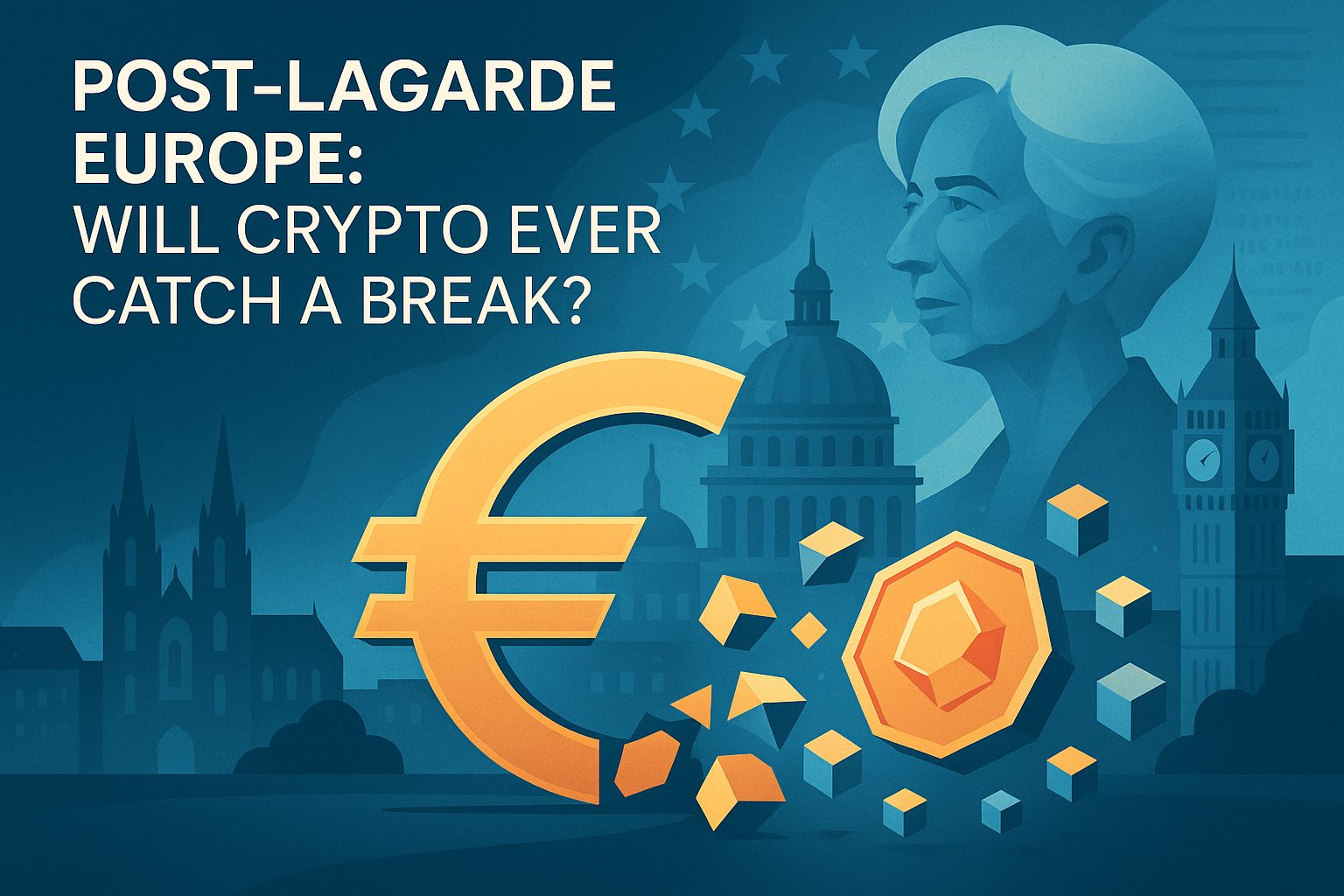
Post-Lagarde Europe: Will Crypto Ever Catch a Break?
Christine Lagarde has been the unmistakable face of the European Central Bank’s cautious, often icy stance toward crypto. She’s called digital assets “highly speculative” and has repeatedly pushed for strict oversight. Now that she’s preparing to step away from the ECB helm, you might expect the doors to swing open for a more crypto-friendly era in Europe.
Not so fast.
Lagarde may be leaving the stage, but the script at the ECB doesn’t look set for a radical rewrite. Her most likely successors aren’t exactly printing “We Love Bitcoin” T-shirts either. If you’re hoping for a sudden European pivot from regulation-heavy skepticism to full-on crypto embrace, you’re betting against the house.
Lagarde’s Legacy: Guard Rails, Not Green Lights
Lagarde’s time at the ECB has been defined by a clear narrative: crypto is interesting as a phenomenon, dangerous as an investment, and manageable only through firm rules. Under her watch, the ECB has:
- Warned retail investors about volatility and scams in digital assets
- Backed strong regulatory tools like MiCA (Markets in Crypto-Assets)
- Pushed the narrative that money issued by central banks is stability, while crypto is speculation
Think of her approach as putting speed bumps, guardrails, and a seatbelt on Europe’s crypto highway before letting any serious traffic through. She didn’t try to ban the road, but she absolutely wanted it fully policed.
The Next ECB Boss: New Face, Same Vibes?
Whoever takes over the ECB inherits more than a job; they inherit an institutional mindset. The ECB is built to be conservative by design. Price stability, financial stability, and keeping the traditional money pipes from bursting all sit way above embracing the latest DeFi yield farm.
Most potential successors share three big traits:
- Institution-first thinking: Protect banks, not disrupt them.
- Risk radar always on: Crypto is seen first as a threat vector, not an opportunity.
- Alignment with global regulators: Coordination with the IMF, BIS, and others who rarely throw crypto a party.
So even if the next president uses softer language than Lagarde, the core position is likely to stay: crypto is allowed to exist, but only inside a tight regulatory cage.
Europe’s Crypto Playbook: Heavy on Rules, Light on Hype
Here’s the twist: while the ECB stays skeptical, the European Union as a whole is quietly building one of the most advanced regulatory frameworks for digital assets anywhere on the planet. The message is basically:
“We don’t love your coins, but if you insist on playing with them, you’re doing it under our rules.”
That’s exactly how MiCA functions: strict licensing, clear obligations, transparency, and serious penalties for non-compliance. It’s not designed to pump bags; it’s designed to avoid blowups.
Lagarde’s exit won’t change that trajectory. If anything, her policies have locked in a template for the next leadership: regulate early, regulate hard, and never let the crypto industry get big enough to threaten core financial stability.
What This Means for Crypto Builders in Europe
If you’re building in crypto across Europe, the Lagarde-to-next-leader handoff is less about a sudden pivot and more about continuity. Here’s the likely reality:
- No regulatory free-for-all: Don’t expect relaxed rules or a sudden flood of ECB love letters to Bitcoin.
- More supervision, not less: Expect tighter monitoring around stablecoins, DeFi on-ramps, and crypto-banking intersections.
- Clearer but stricter paths: The upside is legal clarity; the downside is compliance overhead that feels like it was bench-pressed by a powerlifter.
In other words, Europe might not be the place where the wildest crypto experiments happen, but it could become the region where long-term, regulated crypto businesses quietly scale without constantly wondering if the axe will fall tomorrow.
Investors: Don’t Price In a Policy Moonshot
Crypto markets love a narrative: elections, resignations, new appointments—anything that can be spun into a bullish story. But betting that Lagarde’s departure will unleash a pro-crypto revolution at the ECB is like expecting a central bank to launch its own meme coin. Entertaining, but not realistic.
For investors, the more grounded interpretation is:
- Europe stays predictable, not necessarily friendly
- Regulated venues and compliant projects get a long-term edge
- The ECB continues to back a digital euro over privately issued cryptos
The real macro driver in Europe won’t be who likes Bitcoin the most inside the ECB, but how quickly digital asset rails integrate with traditional finance under this strict but increasingly defined rulebook.
The Big Picture: Stability First, Crypto Second
Lagarde stepping down might feel like the end of a crypto-skeptic era, but in practice it’s more like passing the baton in a relay where everyone’s running the same lane: stability first, innovation a distant second.
Europe will likely keep treating crypto like a strong chemical: useful in controlled environments, dangerous if spilled everywhere. That means:
- Central banks remain wary of private money competing with sovereign currency
- Regulators keep tightening screws around consumer protection
- Crypto’s future in Europe is more about infrastructure than ideology
If you’re bananas about crypto, Europe is not where the party gets out of control—but it might be where the industry slowly grows up. Lagarde’s exit won’t flip the script overnight. It just hands the same cautious script to a new narrator.
Bottom Line: New Leader, Same Cautious Europe
Christine Lagarde’s skepticism shaped how Europe talks about crypto, but the deeper current is institutional, not personal. Her likely successors aren’t gearing up to become crypto evangelists. Expect more of the same:
- Strict rules
- Limited enthusiasm
- Slow, steady integration under heavy supervision
The ECB may change faces, but unless the entire philosophy of central banking in Europe flips on its head, crypto will remain something to be watched, managed, and contained—not celebrated. For now, the message from Frankfurt to the crypto world is clear: you can play here, but only by our rules.
